


This grieving father and ex-general could test the grip of Israel's longest serving prime minister
This grieving father and ex-general could test the grip of Israel's longest serving prime minister

By SAM METZ and JULIA FRANKEL Tue, June 30, 2026 at 7:24 PM UTC
2
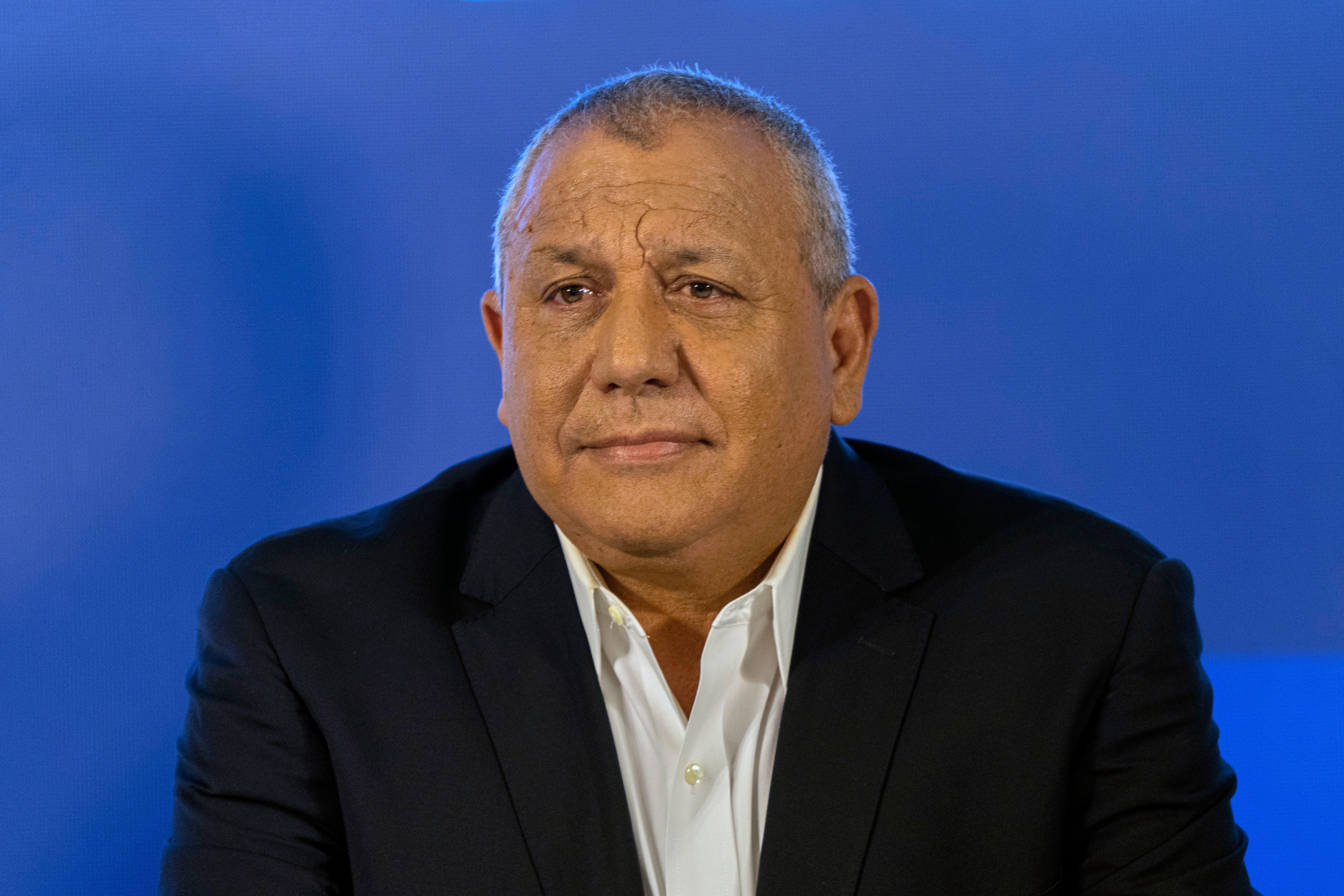
JERUSALEM (AP) — A leading Israeli general who quit Prime Minister Benjamin Netanyahu's war Cabinet after accusing him of lacking a strategy in Gaza has emerged as one of the premier’s most serious challengers in elections scheduled for the fall.
His name is Gadi Eisenkot. On Tuesday in Israel, his centrist political party “Yashar!” or “Straight!” formally launched its election season campaign.
“This time it’s on us,” said Eisenkot at the launch event Tuesday. “Will we turn a blind eye to the disaster that has befallen us? Will we accept the continued division and rush to the next disaster? Or will we heal and rebuild?”
His rise from the highest ranks of the military could sharpen scrutiny of Netanyahu and his stewardship of Israel through multiple wars. Like nearly all of the prime minister’s rivals, Eisenkot has broadly supported Israeli military operations in places such as Gaza, Lebanon and Iran. He did not mention any of those conflicts in his speech Tuesday.
But he has also accused Netanyahu of strategic failure in the wake of the Hamas-led attacks on Oct. 7, 2023, and said his vision of a more isolated Israel is a threat to the future of the state.
In recent days Netanyahu, who leads Israel’s right-wing Likud Party, has fired back, saying if he had listened to Eisenkot, who was opposed to certain operations in Gaza, then “all of Hamas” would still be in control in the territory.
As a political newcomer, however, Eisenkot “looks like a front-runner because he’s everything Netanyahu is not,” said Gideon Rahat, senior fellow at the Israel Democracy Institute think tank in Jerusalem.
“He’s not polarizing, he’s not a populist like Netanyahu, and he will try to unify the country,” Rahat said.
An anti-Netanyahu biography
A 66-year-old son of Jewish Moroccan immigrants, Eisenkot stands in stark contrast to Netanyahu, a U.S.-educated elite who is on trial for corruption. He comes from a working-class family. His English is unpolished. He spent four decades in Israel’s military.
He has also never campaigned on having ties to U.S. President Donald Trump. And his 25-year-old son, Gal Meir Eisenkot, was killed in combat in Gaza, while Netanyahu’s son, a podcaster, lived part-time in Florida.
Losing a son — as well as two nephews — to the war has raised Eisenkot’s profile among Israelis and given him credibility as someone who, having paid the ultimate price, won’t needlessly sacrifice soldiers.
Advertisement
“People trust him to be a real person and a patriot. They expect him to take care of the country and not himself,” said Rahat, who is a professor at Hebrew University.
His platform includes a pledge to strengthen Israel’s national security, including through regional cooperation, although he has said that he supports Jewish settlements that are “in line with Israel’s interests” in the occupied West Bank. He said Tuesday he would focus on establishing a state commission of inquiry to investigate the failures leading to the Oct. 7 attack, rebuild the north and south of the country and invest in education and healthcare.
He has also adopted the slogan “Service for All,” a nod to mandating military service for Israel’s ultra-Orthodox communities. For Israelis who have grown tired of war or sending their loved ones off to fight, such arguments may resonate.
“He presents as an everyman, a reflection of the ordinary Israeli,” Joshua Leifer, a columnist for Israel’s Haaretz newspaper, wrote. He is “a kind of antipolitician,” he said.
In 2024, Eisenkot resigned from Netanyahu’s war Cabinet, citing what he said was the prime minister’s lack of strategy as Israel prosecuted its war in Gaza. He sent a blistering letter to fellow Cabinet members warning that they were mistaking incremental battlefield gains for decisions that could actually neutralize Hamas and make Israel more secure.
But his qualms weren’t with the level of destruction in Gaza or the high civilian toll, both of which drew global outrage. And while at times he has emphasized diplomacy as a way to address Israel’s security challenges, Eisenkot is also credited with formulating Israel’s so‑called “Dahiyeh Doctrine,” named after the area in Beirut’s southern suburbs where the Hezbollah militant group has a stronghold.
He elaborated on the doctrine in a 2008 interview with the Israeli daily Yedioth Ahronoth, after serving as a top military official during Israel’s war with Lebanon in 2006.
“What happened in the Dahiyeh quarter of Beirut in 2006 will happen in every village from which shots will be fired in the direction of Israel,” he said. “We will wield disproportionate power against every village from which shots are fired on Israel, and cause immense damage and destruction. From our perspective, these are military bases.”
Despite anti-Netanyahu sentiment, challengers face difficult path to unseating him
In Israel’s fractured multi-party system, prime ministers rarely finish their four-year terms. Coalitions collapse and new alliances are formed. Because of that — and despite Netanyahu’s unpopularity — it would still be difficult for any of the prime minister’s challengers to form a coalition broad enough to unseat him.
If Eisenkot’s party wins more seats than Netanyahu’s, it will still need to form alliances with enough other parties to constitute a majority. Eisenkot has said he will not compromise on legislation mandating military service for the ultra-Orthodox, who also wield political power.
He will also need to decide whether to include Arab-led parties to get over the threshold — something Netanyahu and his far-right allies have already used as an attack line.
Source: “AOL Breaking”
