


Was King Arthur real after all?
Was King Arthur real after all?

Francis YoungTue, August 25, 2026 at 10:00 AM UTC
1
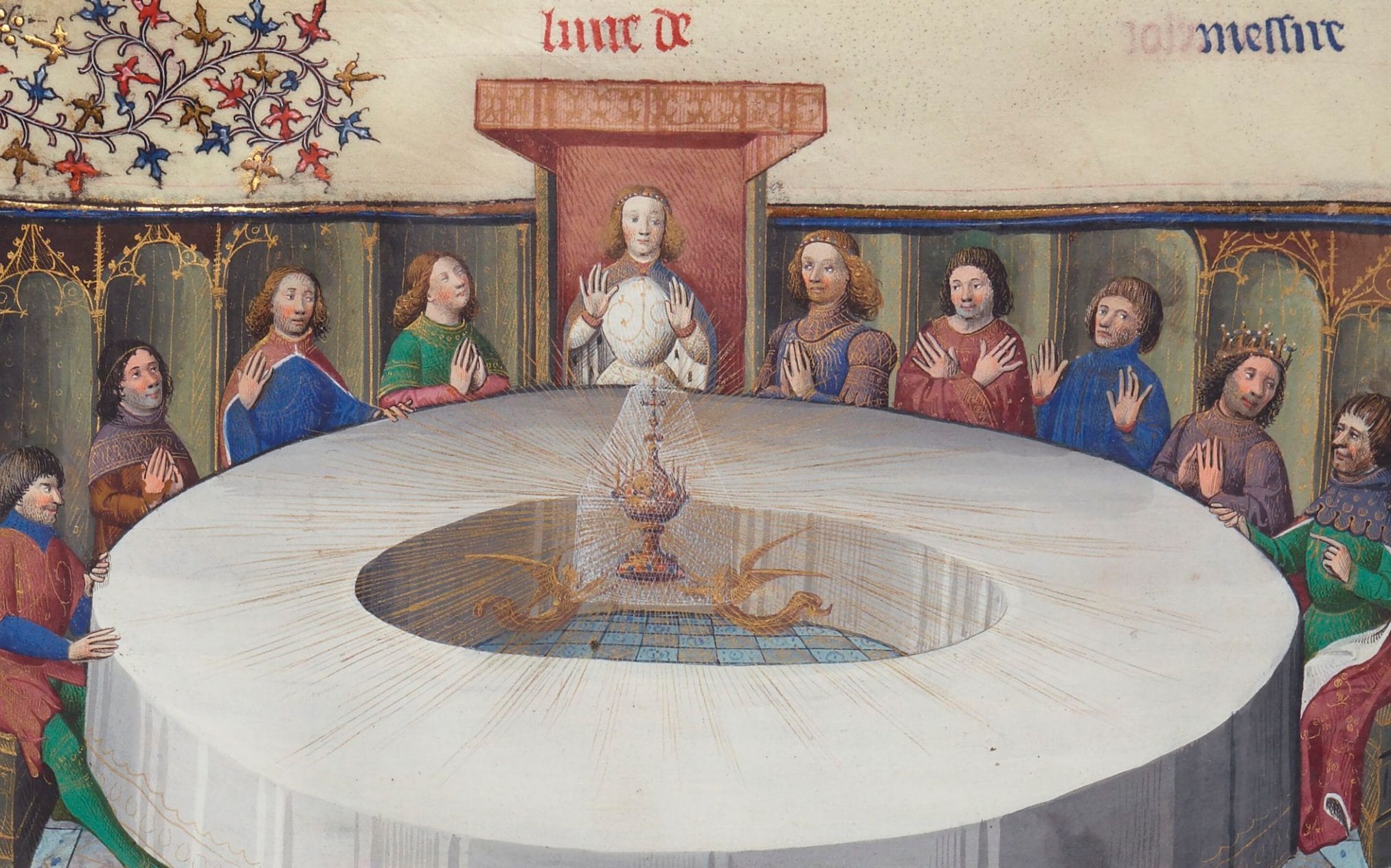
For centuries, historians have pondered the question of whether King Arthur was ever a real person - Fine Art Images/Heritage Images via Getty Images
Tintagel is a bleak and remote spot. It takes resolve to reach this village on the north Cornish coast: tourists must go a long way from the main roads that lead to sun and surfing. But that doesn’t deter those drawn in by the legend of King Arthur. From the 12th century, the impressive castle has been mythologised as the place of his conception; a cave, through which you can walk at low tide, is named after Arthur’s legendary wizard, Merlin. The memory of Arthur (and the question of his existence) looms over Tintagel literally – in the form of Rubin Eynon’s 8ft bronze sculpture, as insubstantial and ethereal as the legend itself.

Historians have posited that Tintagel was once a major royal centre - Matt Cardy/Getty Images
It has long been fashionable to question whether Arthur was ever a real person – indeed, such scepticism is practically a scholarly orthodoxy. But in Tyrants and Traders, a history of Britain’s early medieval period, Ken Dark is willing to unsettle that tendency, at least somewhat. The lack of sources, he argues, does not wholly annihilate the evidence for the king.
“Arthur” was a comparatively rare name in Britain, and the fact that it began to appear as a name for royal males, from the second half of the sixth century onwards no less, suggests that a real person was behind this slew. The oft-heard claim that Arthur is simply a “fiction” also overlooks the awkward problem that we have no evidence for fifth-century Britons writing speculative fiction – nor any reason to think that they did so.

Rubin Eynon’s eight-foot bronze sculpture, Gallos, was installed in 2016 at Tintagel Castle in Cornwall - Education Images/Universal Images Group via Getty Images
So obscure is the era in which Arthur (probably) lived that historians and archaeologists are unsure what to even call it. The period, which is often described to run from the end of Roman Britain in 410AD until the invasion of the Anglo-Saxons around 577, and the construction of their kingdoms, used to be called the Dark Ages (a term that has become unpopular, but which refers to evidential darkness rather than an absence of culture or human achievement).
But today it’s more often called “Post-Roman”, “Sub-Roman”, or “Arthurian”, for the more romantically inclined. It has no firm chronology, because Roman rule continued in many parts of the country, particularly Wales. Our sources are confined to a handful of well-known texts by the likes of Gildas, Bede, Nennius and Patrick, and until recently, the post-Roman period was pretty impenetrable to archaeologists, too.
But advances in archaeology are changing that. If archaeological interpretation has often clustered around a single, celebrated site (Stonehenge for the Bronze Age; Bath for the Romans), Tintagel has become the totem for archaeologists of the post-Roman era.

Tintagel has become the totem for archaeologists of the post-Roman era - Matt Cardy/Getty Images
In the 20th century, under the trowel of Ralegh Radford, a Dark-Age trading emporium was discovered. More recently, historians have posited that Tintagel was a major royal centre, perhaps a sort of capital for the kingdom of Dumnonia (Devon and Cornwall today). On an island racked with internecine and interethnic warfare, it made more sense to base yourself on a desolate headland, even if that meant braving a treacherous sea.
Advertisement
Anything else we know about the period comes from a small number of sources such as Gildas’s On the Destruction of Britain, a forceful denunciation of Britain’s corruption (and its fate under the conquering Saxons).
It’s difficult to date, but it gives us a colourful picture of Dark Age-Britain’s fractious politics and religion, along with five kings (likened to a lion, a leopard, a bear and a dragon) whom Gildas excoriates for oath-breaking, sacrilege, murder, fornication, adultery and deceit. Bede, meanwhile, tells us that the community of the Britons was diasporic, scattered from southern Scotland in the north to Brittany and Galicia in the south. It was the Breton connection which explains why medieval French-speakers were soon telling stories of Arthur.

Dark does have a tentative candidate for Arthur – Arthur, Son of Pedr, a minor Welsh royal from the sixth century, who would have been the right age to have won a battle in 537 (one of the more reliable records of a battle involving Arthur). But if not all readers are convinced, Dark’s overall contention that some flesh-and-blood Arthur existed will still be compelling.
The book strikes a rare balance between conveying the often ambiguous and contentious nature of archaeological interpretation on the one hand, and keeping his narrative accessible to the general reader on the other.
Tyrants and Traders grapples intelligently with some contentious issues, engages holistically with the latest archaeological research, and puts forward some intriguing, if ultimately unprovable, hypotheses about Britain’s most mysterious historical era.
&starf&starf&starf&starf&star
Tyrants and Traders is published by Bloomsbury at £20. To order your copy for £16.99, call 0330 173 0523 or visit Telegraph Books
Try full access to The Telegraph free today. Unlock their award-winning website and essential news app, plus useful tools and expert guides for your money, health and holidays.
Source: “AOL Breaking”
